Rowe by Rowe: Inside my walk with Georgia Ag Commissioner Candidate Sedrick Rowe
By Cowgirl Candace. Images by Vintrez Davis.
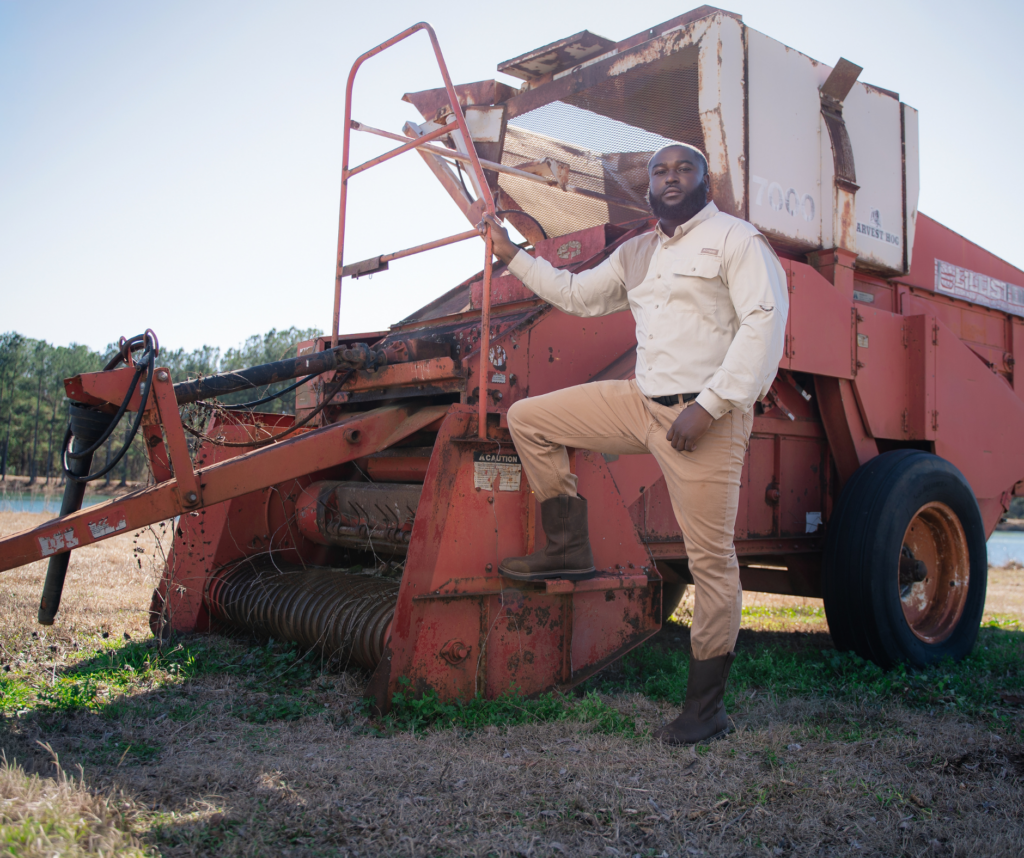
Every now and then, Cowgirl Candace meets a fellow farmer whose grit reminds me why the land is my ancestral mission. That modern farmer is Sedrick Rowe. Our agricultural alignment didn’t begin on a campaign trail. It started years ago in South Georgia fields where a first-generation producer decided to grow one of the most controversial crops in the region: organic hemp. I became the first journalist to break Sedrick’s story during a U.S. Department of Agriculture (USDA) grant project documenting innovative Black farmers across America’s Black Belt Region. At the time, he was emerging as one of the first Black organic hemp farmers in South Georgia, navigating a complicated regulatory landscape with little precedent and even less support. What I saw in him then is the same thing I see now as he runs for Georgia Agriculture Commissioner: vision and an unshakeable commitment to improving agriculture for everyone. As a fourth-generation farmer from Edward Hill Farm outside of Milledgeville, Georgia, I recognize that spirit immediately.
A Shared Georgia Root System
Sedrick’s journey is deeply tied to Albany, Georgia, a place that holds personal significance for me as well. It’s the same community where my grandparents, Amos and June Morrow, raised my Daddy and Auntie Kowgirl Kathy. That shared South Georgia soil is part of what connected us. Sedrick grew up in Albany before attending land-grant institution Fort Valley State University (also where my grandparents met, fell in love, and graduated before marrying). Sedrick earned a bachelor’s degree in plant science and horticulture. A lifelong student-athlete who loved being outdoors, he discovered his calling right before graduation. His first professional role brought him back home to Albany, working with the Southwest Georgia Project, the historic organization founded by civil rights leader Rev. Charles Sherrod. From there, Sedrick expanded his knowledge of agriculture and environmental health, earning a master’s degree in public health while continuing to farm peanuts and collaborate with organizations like Georgia Organics. Later, he served as a USDA soil conservationist, where he saw firsthand how federal policy shapes farmers’ lives. From disaster relief to conservation programs. Sometimes for the better. Sometimes not.
Learning the System to Fix the System
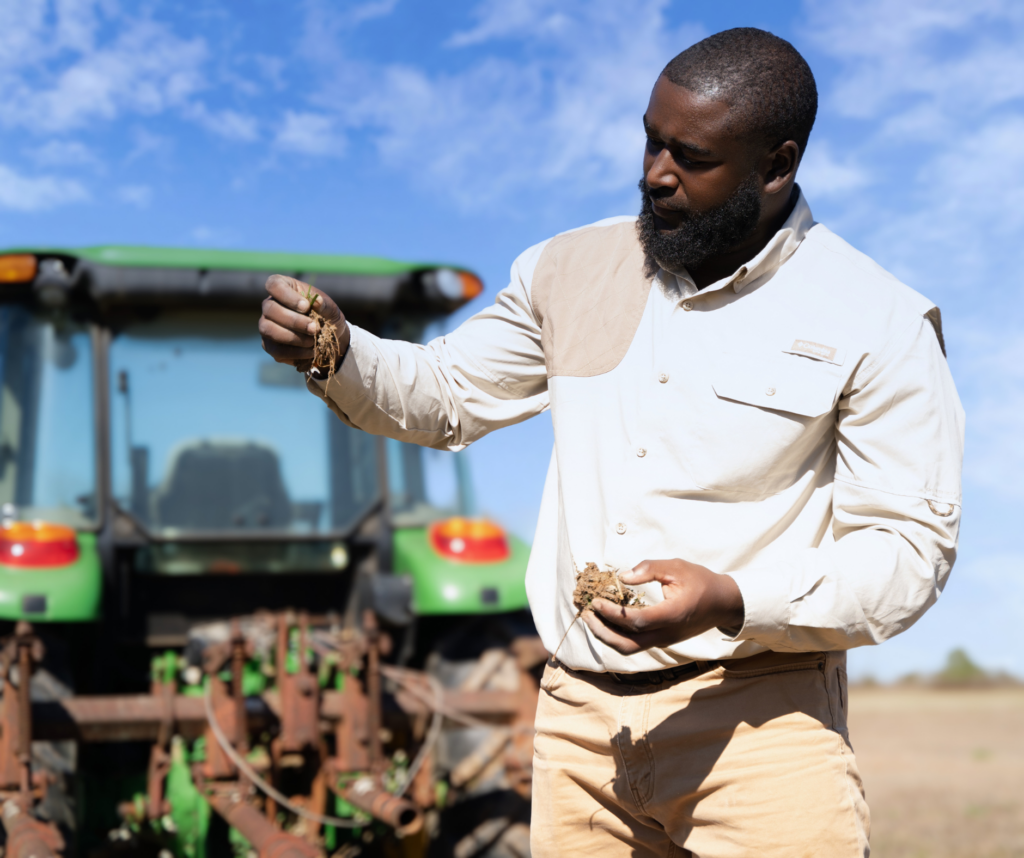
Like many beginning farmers, Sedrick encountered barriers that rarely make headlines. “There’s a heavy price to being a small farmer,” he told me. “The input costs — equipment, labor, everything — are taxing.” He faced challenges accessing loans and grants while trying to grow hemp in Georgia’s emerging market. But instead of walking away from the system, Sedrick decided to understand it. He began studying agricultural policy more deeply, eventually testifying before the Georgia Senate Committee on Agriculture and Consumer Affairs and the Senate Appropriations Committee about how funding is distributed to farmers and ranchers under the Farm Bill. Today, he’s pursuing a doctoral degree in integrated biosciences at Tuskegee University, continuing to combine scientific research with real-world agricultural experience. That blend of field knowledge and academic study led him to a bold conclusion: The system needs fixing.
A New Generation of Ag Leadership
Sedrick understands the historical weight of stepping into statewide agricultural governance. As a first-generation farmer entering into a race where few Farmers of Color have ever stood, Sedrick is helping reshape what ag influence in Georgia can look like. His candidacy also continues a quiet but powerful Albany tradition of agrarian leadership. The city has produced voices like longtime Georgia legislator Winfred Dukes, who previously ran for agriculture commissioner advocating for farmers and rural communities. That shared hometown makes Albany an unlikely but meaningful hub for Black farm policy stewardship in Georgia politics. But Sedrick isn’t stepping forward for symbolism. He’s bringing science, lived experience, and candid policy conversations to the table.
Modernizing Agriculture for Farmers and Families
Agriculture is Georgia’s No. 1 economic driver, but Sedrick believes the industry is operating on an outdated system. His campaign focuses on three pillars: Fix the System, farmers shouldn’t wait months or years for disaster relief and support programs to reach them; Lower the Costs, both farmers and families are feeling the squeeze of rising input costs and grocery prices; and Feed Our Own, Georgia farmers should supply Georgia communities from farmers markets to rural school lunchrooms. “Modern problems require scientific solutions,” Sedrick says. “Not just politics.” For him, organic farming is about crop choices, designing healthier food systems, and helping families make more informed food decisions.
A Friendship Built Through Brand Storytelling
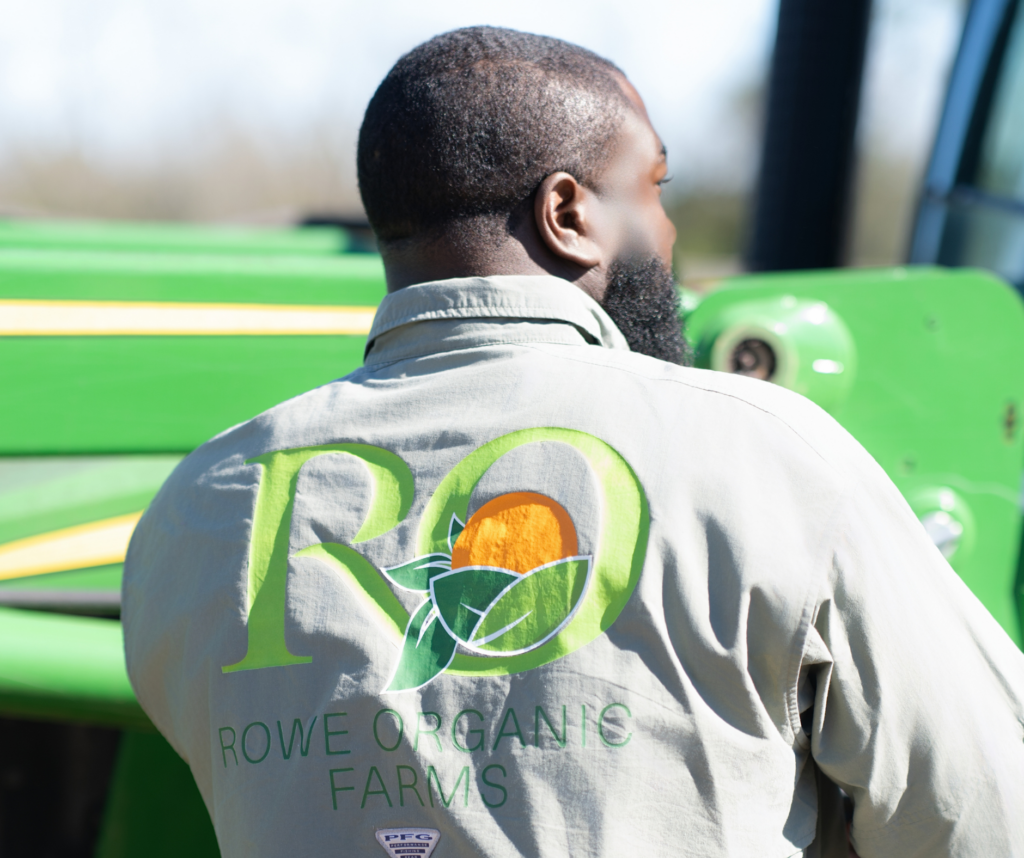
Our collaboration didn’t stop with that first article. Over the years, Sedrick and I have crossed paths through multiple digital campaigns celebrating agriculture and environmental stewardship. We were both featured in Wrangler’s 2021 Earth Month campaign, celebrating sustainable agricultural leaders. Later, I served as Sedrick’s unofficial brand image consultant (lol), helping secure media coverage in pure Southern style. Through it all, I’ve watched him evolve: emerging hemp producer to farming advocate to candidate. Rowe by Rowe.
Bringing it Back to Our Homestead
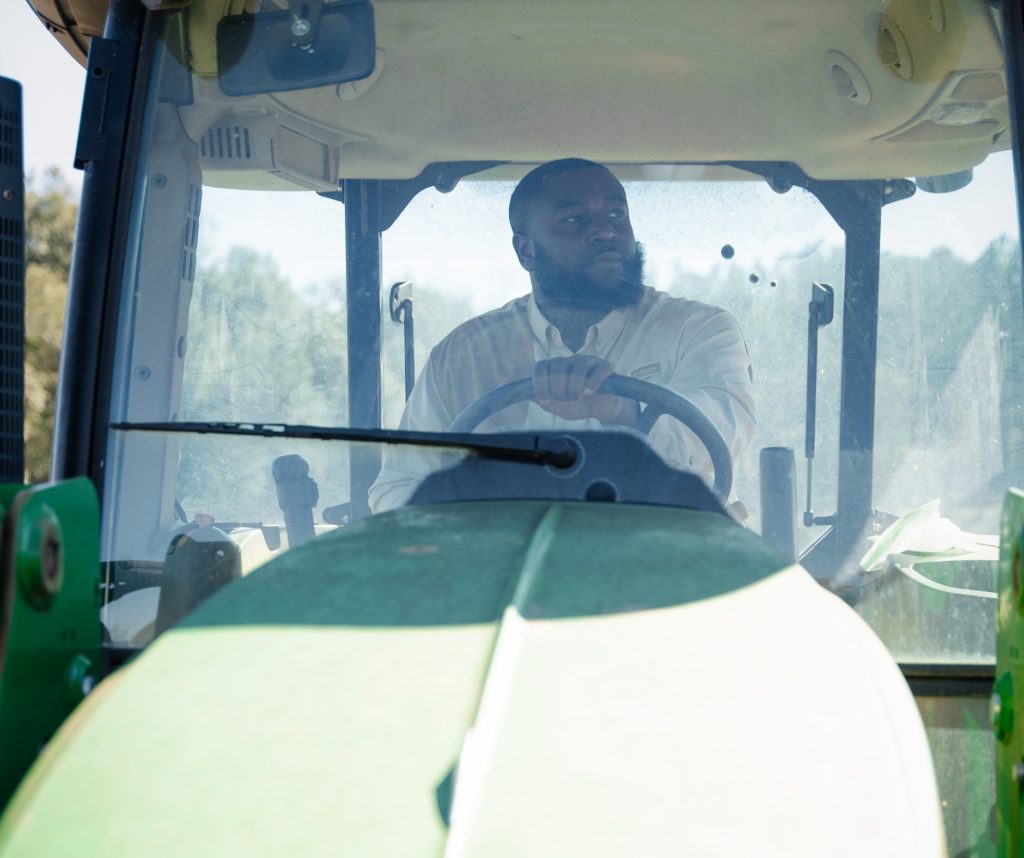
Stories like Sedrick’s remind me why I do the work I do. My roots run deep through Edward Hill Farm, where generations of family stewarded land, raised livestock, and cultivated community across Georgia’s Black Belt. My grandparents, Amos and June Morrow, raised their children in Albany while carrying forward the homesteading traditions they learned growing up farming and picking cotton between Middle and South Georgia. Grandpa Amos eventually carried that land wisdom into public service, spending more than two decades as a federal employee with USDA’s Farmers Home Administration (FHA). Grandpa helped rural producers access the loans, land support, and housing resources that kept farms and families afloat across Southwest Georgia.
Loyally, he pushed paperwork while translating farm life into policy solutions that worked for real people. He inspected farmland, advised producers, and represented the agency at regional conferences because Grandpa believed farmers deserved both respect and opportunity. His commitment to excellence earned him the FHA’s “Certificate of Merit,” recognition for ensuring his office exceeded loan and service goals that supported both farmers and rural housing programs. Grandpa also remained a lifelong member of the Georgia Society of Farm Managers & Rural Appraisers. He encouraged the next generation of producers, especially Farmers of Color, to pursue their version greatness in land stewardship and farm management. That legacy of stewardship and advocacy stuck with my family. It continues to mold me.
Observing a new generation of farmers like Sedrick step forward with scientific insight, policy understanding, and a commitment to our neighborhoods gives me hope for Georgia agriculture’s future. Sedrick didn’t inherit a farm. He earned one. And now he’s working to make sure the system works for every farmer who comes after him. Grandpa Amos helped farmers navigate the system; Sedrick is stepping forward to improve it. Somewhere between Edward Hill Farm and Albany’s hemp fields, the future of Georgia agriculture is already shifting. Sedrick Rowe is building a campaign rooted in ag innovation, community, and progress. If you believe in a tomorrow where Georgia farmers thrive and our hometowns have better access to locally produced food, click here to learn more and get involved with Sedrick’s pioneering push.


This is an outstanding article and truly highlights Rowe’s readiness for this position. Many blessings on his campaign and future victory!
Thank you so much Kristina for taking the time to read his courageous agriculture story and supporting his dreams as a trailblazing organic farmer.
Some thoughts: Democrats are dumb not to prioritize down-ballot races like AG commish. Hopefully Mr. Rowe can articulate a vision for transforming what has traditionally been an agency with a regulator focus to one more geared to advocacy for farmers and rural communities.. This would include trying to help young and new-entry farmers secure credit and capital to get on the land, to preserve prime agricultural land and protect it from non-farm development pressure, to promote the sale of Peach State farm and forest products to Cuba, which represents an export market for GA poultry, dairy and softwood lumber to name a few commodites.
Hi, Matt. I appreciate you for taking the time to read my narrative and engaging with the piece.
This article also makes it plain that this isn’t just about one candidate. It’s about a generational shift in who gets to shape Georgia agriculture. A shift rooted in real work, real knowledge, and real community.
If more people read pieces like this, they’d understand why his candidacy resonates across rural, urban, and young‑farmer circles. It’s not hype. It’s history meeting the moment.
Keith: I truly appreciate you taking the time to read and reflect so deeply on the piece. You captured the heart of it. This moment is bigger than any one candidate. It’s about who has proximity to the land, the work, and the communities shaping Georgia agriculture moving forward. When lived experience meets leadership, the conversation shifts in a real way. Grateful for readers like you who see that clearly.