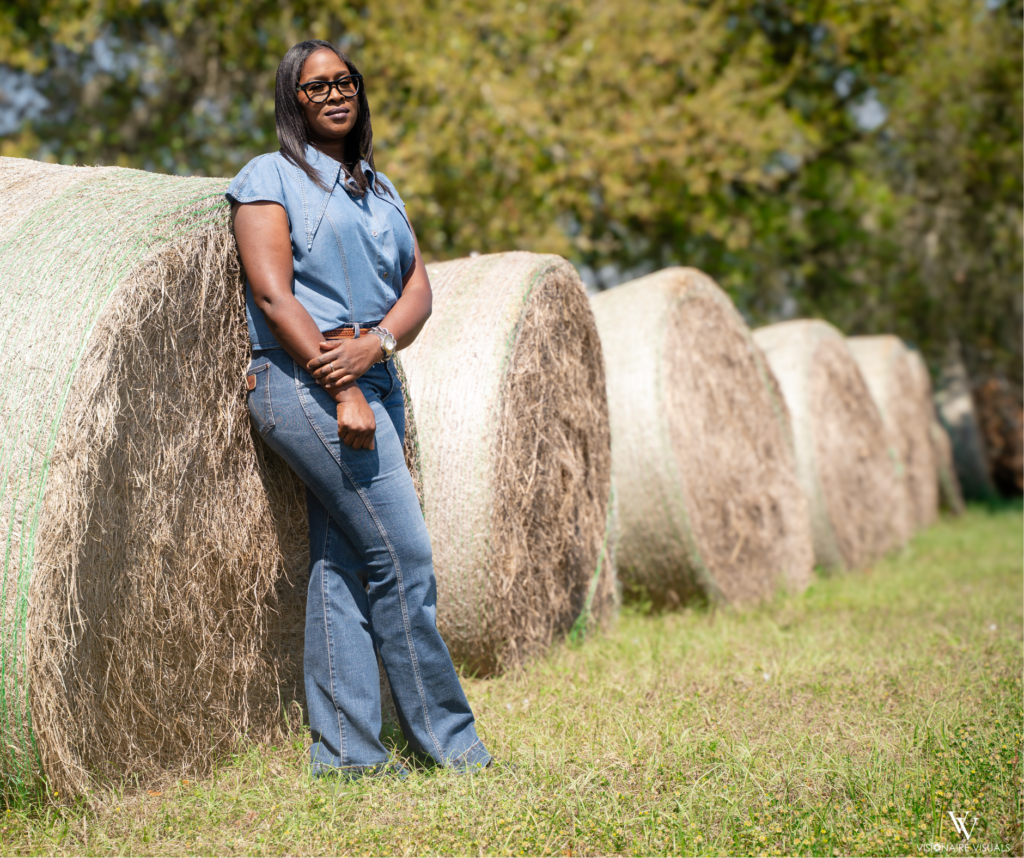
Georgia educator flips STEM lessons into future farmers
By Cowgirl Candace. Images by Vintrez Davis.
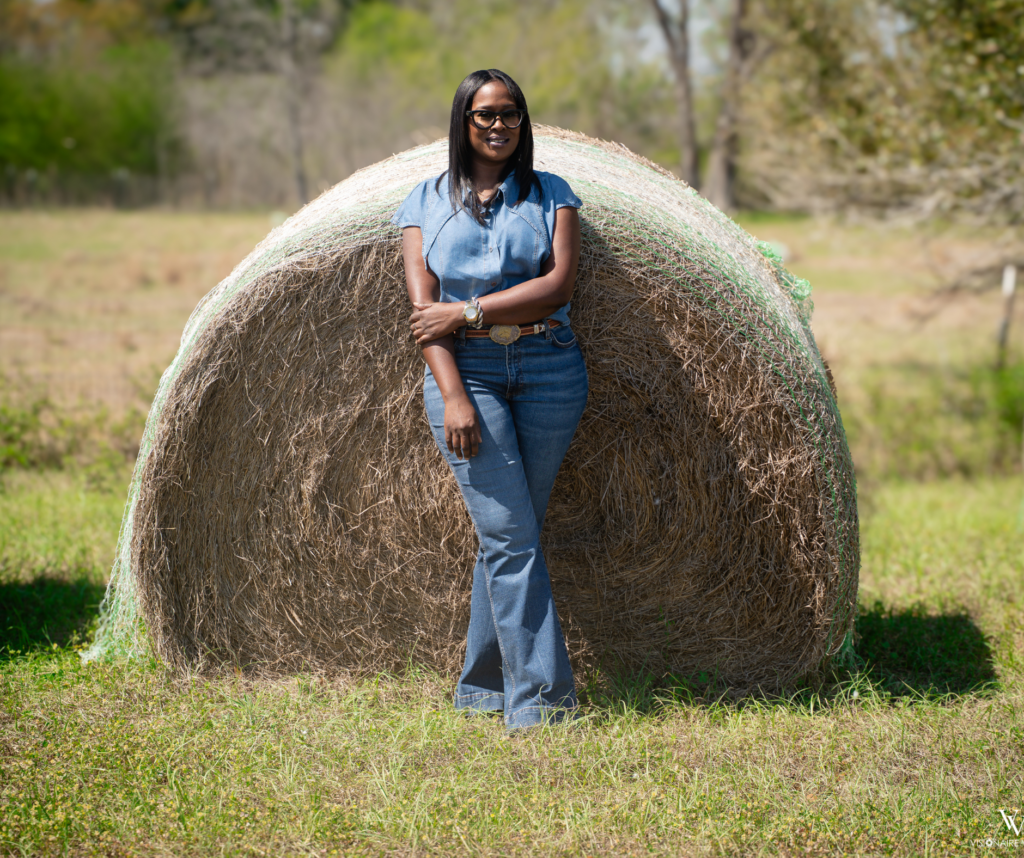
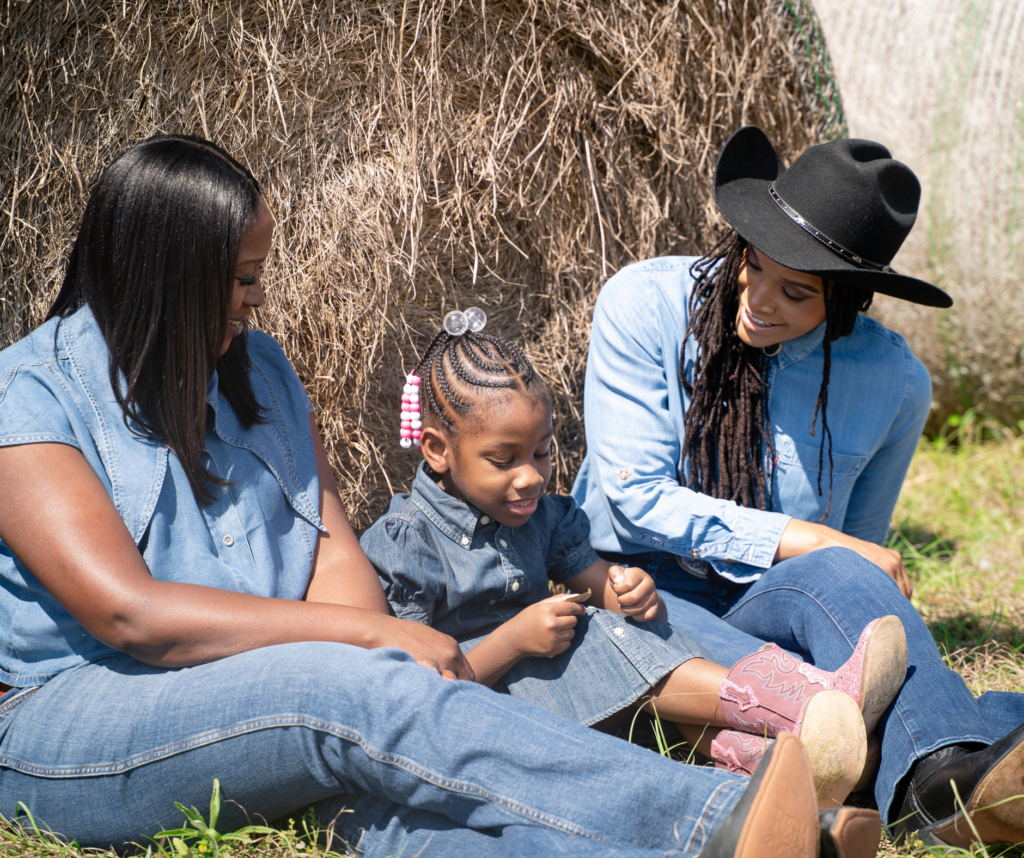
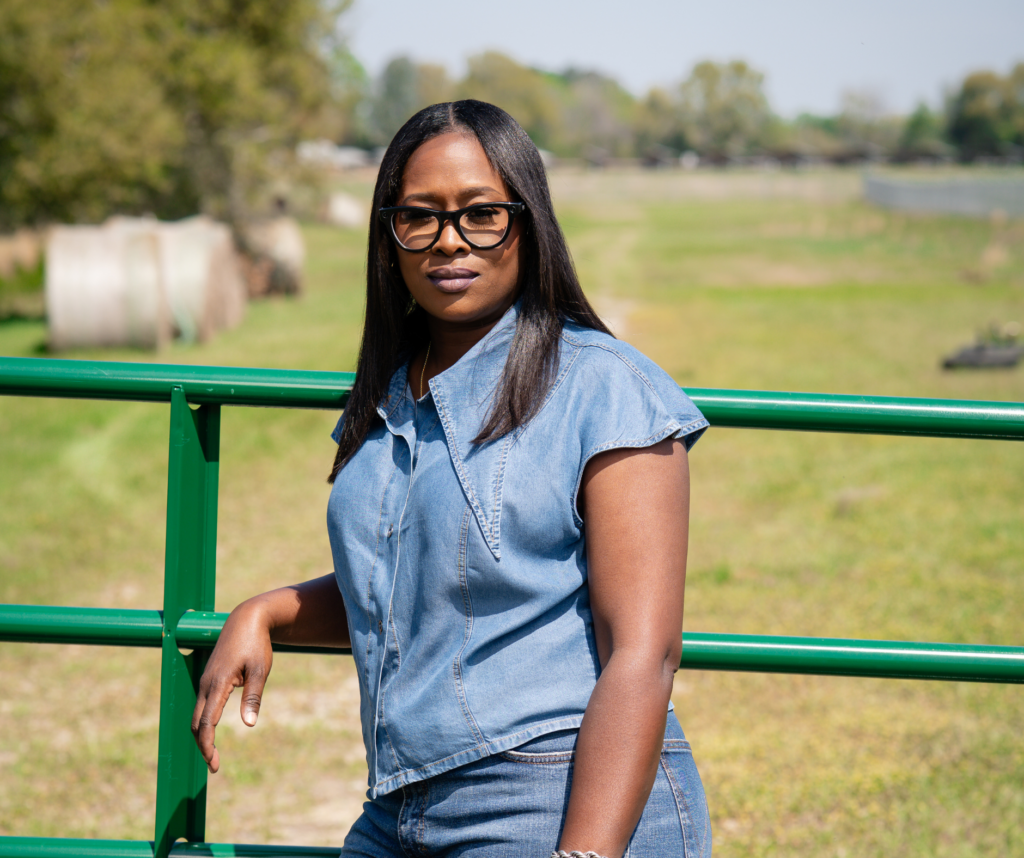
Heather Wilson moves with grace like a woman who understands both the classroom and the field. Children gather around her in clusters at MLK Jr. Elementary’s annual spring STEM (science, technology, engineering, and mathematics) and Agriculture Day in Albany, Georgia. Hands itching to touch everything from cowhand tack to drones hovering just above their heads. Heather stands at the center of it all, bridging worlds. “I always ask the kids: ‘What do you want to be when you grow up?’” she asked as her voice carried that familiar South Georgia cadence. “No matter their answers, we can tie it back to agriculture.”
And like that, she’s connected science to soil. Curiosity to culture. Young minds to the land that has always sustained them. The 43-year-old farmer and educator serves as the school’s STEM coordinator, but what she’s really doing is something much deeper and cooler: raising farmers, engineers, and problem-solvers. She’s making sure the next generation understands that agriculture is both tradition and innovation, especially at a time when STEM occupations are projected to grow nearly 11 percent nationwide during the next decade compared to about 5 percent for all other jobs, according to federal labor data. And in Georgia, that demand hits even closer to home.
The Peach State continues to see strong growth across STEM-driven industries — from agriculture technology and environmental science to logistics and advanced manufacturing — with thousands of projected openings requiring technical and analytical skills. That means the seeds Heather is planting in an elementary classroom today are directly tied to the workforce Georgia will depend on tomorrow. Watching her now, I can’t help but think back to the version of Heather I first met. Out in the field, hands in the dirt, learning a crop most folks in Georgia didn’t yet understand.
Before the STEM labs and schoolyard lessons, there was hemp. I remember the sweat before I remember the science. Heather and fellow organic hemp farmer Sedrick Rowe side by side in Albany heat. Both pushing and pulling a makeshift hemp seed dispenser across uneven soil. No shortcuts or fancy machinery. Just grit, body weight, and belief. “Dropping the clones took us hours in that heat,” she told me back then. “I think we both lost a lot of weight that day.”
That was 2020, a time when Georgia farmers were beginning to understand what hemp could mean for the future of agriculture. Following the 2018 Farm Bill, hemp re-emerged as one of the nation’s most versatile crops with applications ranging from textiles and construction materials to health and wellness products. A multi-billion-dollar industry still taking shape in Southern states like Georgia. Sedrick secured his license through the Georgia Hemp Program. Heather stepped in as both student and builder. She learned fast, asked questions, and applied knowledge in real time. Together, they planted thousands of clones by hand, ran irrigation lines, and studied soil. Fought through crop loss caused by Southern root rot.
It wasn’t glamorous work, but it was most definitely historic. A phone call about corn changed everything. “For some reason, I was stuck on growing corn for myself,” Heather once told me. “When Sed explained what he was about to do with hemp, our conversation changed.” That pivot placed her at the front lines of one of Georgia’s newest agricultural frontiers. As a Black woman stepping into a billion-dollar industry still finding its footing in the South and where Farmers of Color remain underrepresented across ownership and leadership, Heather was all in. And she brought her whole self to the opportunity.
Even now, I can still see her. Those neon acrylic nails catching sunlight as she worked the land, moving between rows of hemp like she’d been doing it her entire life. Because in many ways, she had. Heather’s story stretches through America’s Black Belt Region. Across Georgia, South Carolina, and Alabama, tracing back to Gullah-Geechee farmers, sharecroppers, and Creek Indian lineage. “My roots go all the way to the West Indies and back,” she told me. That ancestral connection both informed her work and called her back to it.
Today, that same woman stands in front of a new generation, teaching them how to farm and think about the farming possibilities. Through STEM, she introduces them to precision agriculture and a rapidly expanding field where digital platforms, data mapping, and watering technology help farmers increase yields while conserving resources. By way of agriculture, she introduces them to purpose. Drones become tools for crop management. Irrigation becomes a lesson in conservation. Farming becomes an attainable pathway. And the need for that kind of knowledge is only growing.
Across the United States, STEM workers earn a median salary significantly higher than non-STEM occupations, making these career paths economically transformative for families and communities. Yet access and representation remain uneven. Black workers make up roughly 9 percent of the STEM workforce despite holding a larger share of the U.S. population, which is a gap that underscores the importance of early exposure and culturally relevant education in communities like Albany.
Because research continues to show that when students encounter STEM early, especially in elementary school, they’re far more likely to pursue those fields later in life. For rural and Black Belt communities, that exposure can change everything. Heather’s work is foundational. Stories like hers serve as a reminder that agriculture is about people, collective memories on the land, and who gets to shape the future of local neighborhoods.
In a state where agriculture contributes billions to the economy each year, the future of farming will depend on students who can think beyond tradition and operate within technology-driven systems. Heather is making sure Georgia’s next generation is ready. As she roots for her farming friend Sedrick — now running for Georgia Agriculture Commissioner — she hasn’t wavered in her support. “Sed and I worked hard to pave the way for organic hemp to grow in Georgia,” she said. “I’m behind him because I’ve seen him make changes in agriculture to move Georgia forward.”